Showing posts with label Puppy Culture. Show all posts

Thursday, January 8, 2026

Puppies in the Transitional Stage of development

3 sisters - Danika (purple collar) Bryce (pink collar) and Shannon (blue merle)

I thought it might be fun to discuss puppy development, as our puppies have transitioned from one stage to the next.  They were in the “neonatal stage,” but are now in the “transitional stage.”

0-2 Weeks: Neonatal Stage (Dependence)
  • Completely reliant on mother for warmth, cleaning, and food (colostrum is vital). 
  • Senses of touch and taste are present; sight and hearing are undeveloped. 
2-4 Weeks: Transitional Stage (senses awaken)
  • Sensory Growth: Eyes open (around 2 weeks) for blurry vision, ears start working, and smell becomes more refined.
  • Physical Milestones: They gain leg strength, begin to stand, and by week 4, can usually walk, run, and play.
  • Socialization: They start interacting with siblings, learning bite inhibition from play, and get used to being handled gently.
  • Teeth: Baby teeth (deciduous teeth) begin to emerge.
  • Early Weaning: Around 3 weeks, start introducing a gruel of milk replacer mixed with softened puppy food. 


They can see and hear now, and they have started to communicate with us and each other.  I love this stage, as their personalities really start to develop and they begin exploring and learning.  They’ve begun climbing, barking and even play growling.  

Their development in this stage is so rapid, they change from day to day.  Yesterday this little blue girl and both boys, kept climbing in my lap.  So they are already seeking out comfort and attention!
 
This was the green collar smooth boy, now called Sam

This was the red collar rough boy, now called Dean

Sweet Danika, she was the first puppy born, the rough who with the purple collar

This transitional period is crucial for building foundational social skills and sensory processing, setting the stage for future learning and confidence. 


Pretty Bryce, the rough girl with the pink collar

As we always try to follow helpful guidelines created by Puppy Culture, these are their recommendations for 2 - 4 week old puppies:

Raising Puppies: The First 2 Weeks - Timberidge Goldendoodles
Puppy Culture for 2-4 week old puppies focuses on stimulating their developing senses (touch, smell, sound) and introducing novel experiences like different textures, sounds (classical music, mild noises), and early handling (Early Neurological Stimulation - ENS/ESI) to build stress tolerance, alongside littermate socialization, litter training, and beginning "manding" (sitting for rewards) as they start to walk and eat gruel/soft food, preparing them for the world and building confidence. 
Key Activities (Weeks 2-4):
  • Early Neurological Stimulation (ENS) & Scent (ESI): Gentle exercises like holding puppies in different orientations (head up, head down, supine) and introducing scents (orange, rosemary, banana) helps wire stronger nervous systems.
  • Sensory Exposure: Introducing new objects, sounds (classical music, thunder/fireworks recordings), and different surfaces (mats, toys) to build "bomb-proofing" and curiosity, not fear.
  • Physical Development: Pups start walking, pawing, and mock-fighting; they begin to move away from the mother for short periods.
  • Early Weaning: Introducing softened gruel or meat, often served on different textured surfaces (dishes, frisbees) to get them used to varied feeding environments.
  • Manding: Teaching them to sit politely to ask for something, starting with taking treats from hands, building self-control.
  • Litter Training: Introducing a litter box within the whelping area.
  • Handler Interactions: Daily individual cuddles and positive touch, introducing new people. 
Goals for this Stage:
  • Build a stronger, more resilient nervous system (via ENS/ESI).
  • Develop problem-solving skills by encountering new things.
  • Condition them to novel sights, sounds, and textures.
  • Foster independence from the mother and littermates.
  • Teach basic manners (manding). 
This period is crucial for neurological development, teaching puppies to explore and process the world in a controlled, positive way.   


We are so thankful our puppies are all doing well, and can’t wait to share more of their growth and development with you in the upcoming weeks!

Wednesday, June 11, 2025

Socialization and Enrichment


There are three kinds of stimulation that influence how a puppy develops.  The first, as previously discussed here, is ENS or early neurological stimulation.  The second is called socialization.  To be the most effective, the ideal time for puppy socialization is between 4 and 16 weeks old.  Too much or too little socialization during this period can negatively impact the puppies development, creating fearful, anxious or shy adults.

I’ve written posts about puppy socialization in the past, and they can be found here:

Puppy Socialization

Socialization

Of course our new puppies aren’t here yet, but we have already reached out to friends in anticipation of their arrival.  We’ve asked friends to plan on visiting our puppies, to help socialize them.  And they’ve all said yes, because who doesn’t want to cuddle a collie puppy?  

The third kind of stimulation is called enrichment.  This stimulation has no time limit, as you can begin as soon as the puppies have opened their eyes and have begun to explore their environment. Enrichment  provides puppies with positive experiences.  This allows the puppies to explore and investigate the world around them while helping build their confidence.  Puppies supplied with many different forms of enrichment typically grow up to be more inquisitive and intelligent adults.

There are many forms of enrichment, and we have enjoyed creating new methods with our past litters.  I thought it would be fun to share some of the videos from when Peyton and Addi were puppies, as I don’t think I ever shared them here.  They show some of our efforts to provide socialization and enrichment.

In this video the puppy with the white on her nose and head is Peyton.


Hungry little puppies, can you spot Peyton?

Melody, now Lilac, was the only rough puppy in the litter.  This was her trying out the tunnel for the first time.


This is when we introduced some puppy play equipment.


The puppies can be seen here learning about new, loud noises as a large truck drives by the yard.


Here the puppies met a new friend!  They were definitely unsure, but curious, about the talking dragon!


This was the day we introduced the snuffle mat


And here is the first day we introduced their pool.  They quickly became fans of the pool, with the hot Summer weather we were experiencing!


I am researching new ideas to provide both socialization and enrichment for the new puppies.  I can’t wait to meet them!

Sunday, October 30, 2016

A well-socialized puppy is a happy puppy.

Today the puppies turn 6 months old, so I thought it would be the perfect time to share this post.  Happy birthday puppies!


Breeding dogs is not an easy task.  You choose the stud dog carefully, do all the health screenings, and watch over your expectant mama dog vigilantly.  You pray for an easy birth, and for all the pups to be born healthy.  The day finally comes, and the new puppies arrive, blind, deaf and defenseless.  And now the hard work begins…


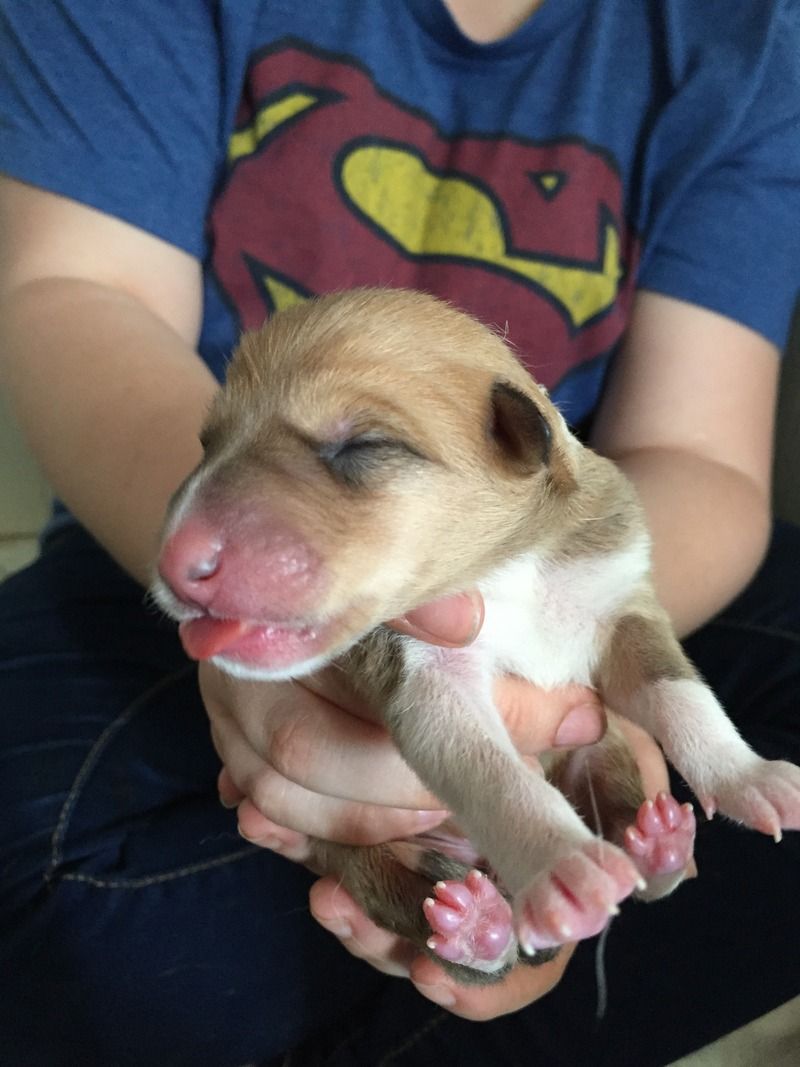
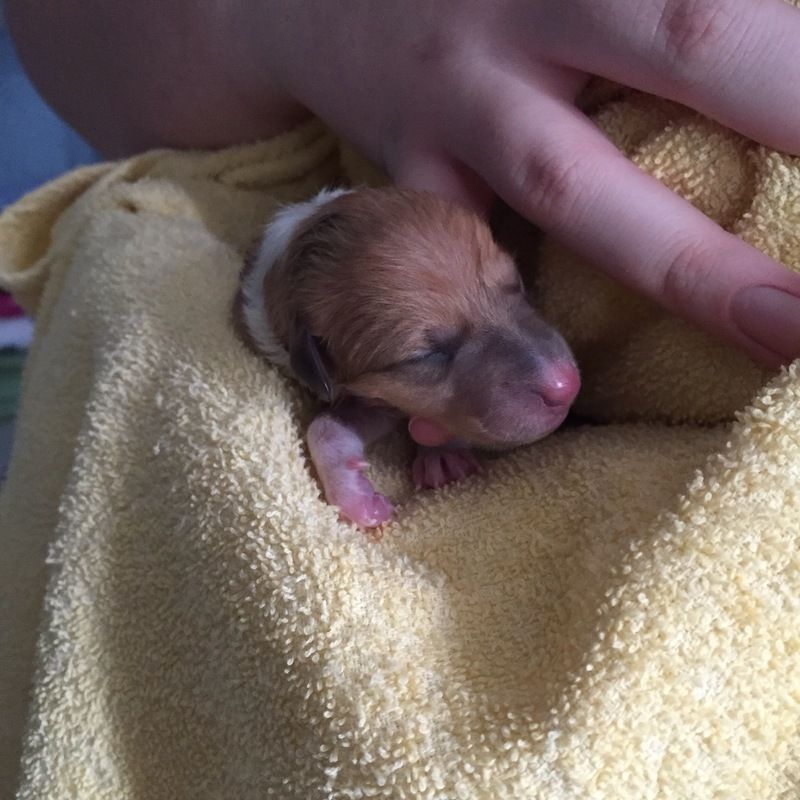
Newborn Sophie

Newborn Maizie


There is more to breeding and raising a healthy litter of puppies than just choosing the right stud dog, the best foods and determining when to vaccinate and de-worm the puppies.  Equally important is raising puppies that are well-socialized and fearless in new situations.  To ensure that our puppies will adapt quickly to life with their new families we began using socialization protocols, some we created ourselves, and some we learned from other breeders following “Puppy Culture.” 


The key to early socialization is to present new stimuli to puppies each week in a fun and gentle way.  We didn’t want to scare our puppies, so each new experience was introduced in a positive manner.  Right from the beginning our puppies began learning that new people, noises and new objects were good things.  We started out socializing our puppies with people before their eyes or ears opened, when their entire world was discovered through the sense of touch and smell.  They were held gently, cuddled and even had their tiny paws rubbed.

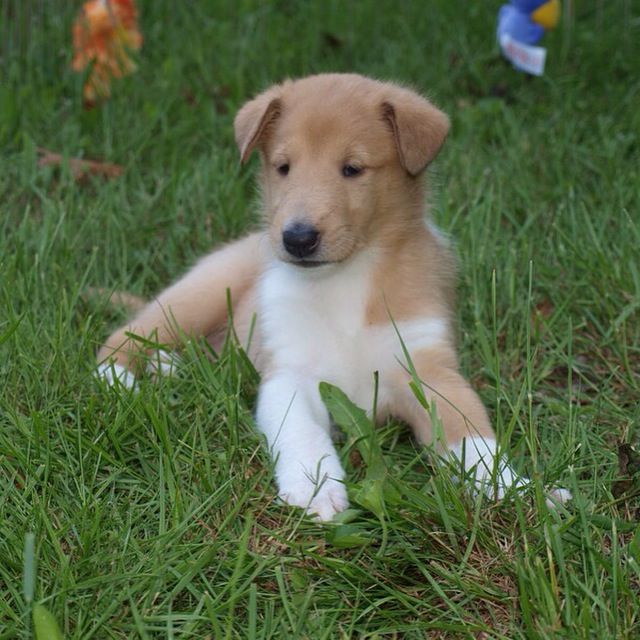
2 weeks old


Then as they grew, and they could see and hear, we introduced new toys into their whelping box.  We also began introducing new textures through blankets and bedding.  And with the help of our family, they began meeting new people.  Each new experience was presented in as positive a manner as we could make it.


When they were old enough, they were taken outside for the first time, and that is when the real fun began.  Each week we would present them with new toys and new objects to climb on, over and in.  And we had people of different ages, and wearing different clothing, meet our puppies for carefully monitored playtime.  They met seniors, children, men, women, people in uniforms and people wearing hats.  They were introduced to new sounds like when the neighbors mowed their lawns, when a motorcycle would drive up the street, or when the garbage trucks came to collect the garbage.  Everything was new to them, and everything was made into a positive experience.


5 weeks old


6 weeks old


What did following the “Puppy Culture protocols” accomplish for us?  It helped us to raise puppies, that are confident and fearless.  I can’t imagine raising puppies any other way.  Well-socialized puppies learn quickly, readily adapt to new situations and the adjustment to life with their new families goes much more smoothly.   They are almost immune to fear, and recover from stressful situations that other puppies may take a while to overcome.  At even a young age, these puppies are much more focused, and easier to train. It's this greater resiliency and retention of early training lessons that help them to connect to their human families.

The puppies at 7 weeks old


The puppies at 8 weeks old


We will definitely be using Puppy Culture protocols in all of our future litters, as we want to give our puppies the tools to live happy lives.